About the Artist, The PILL, 2026
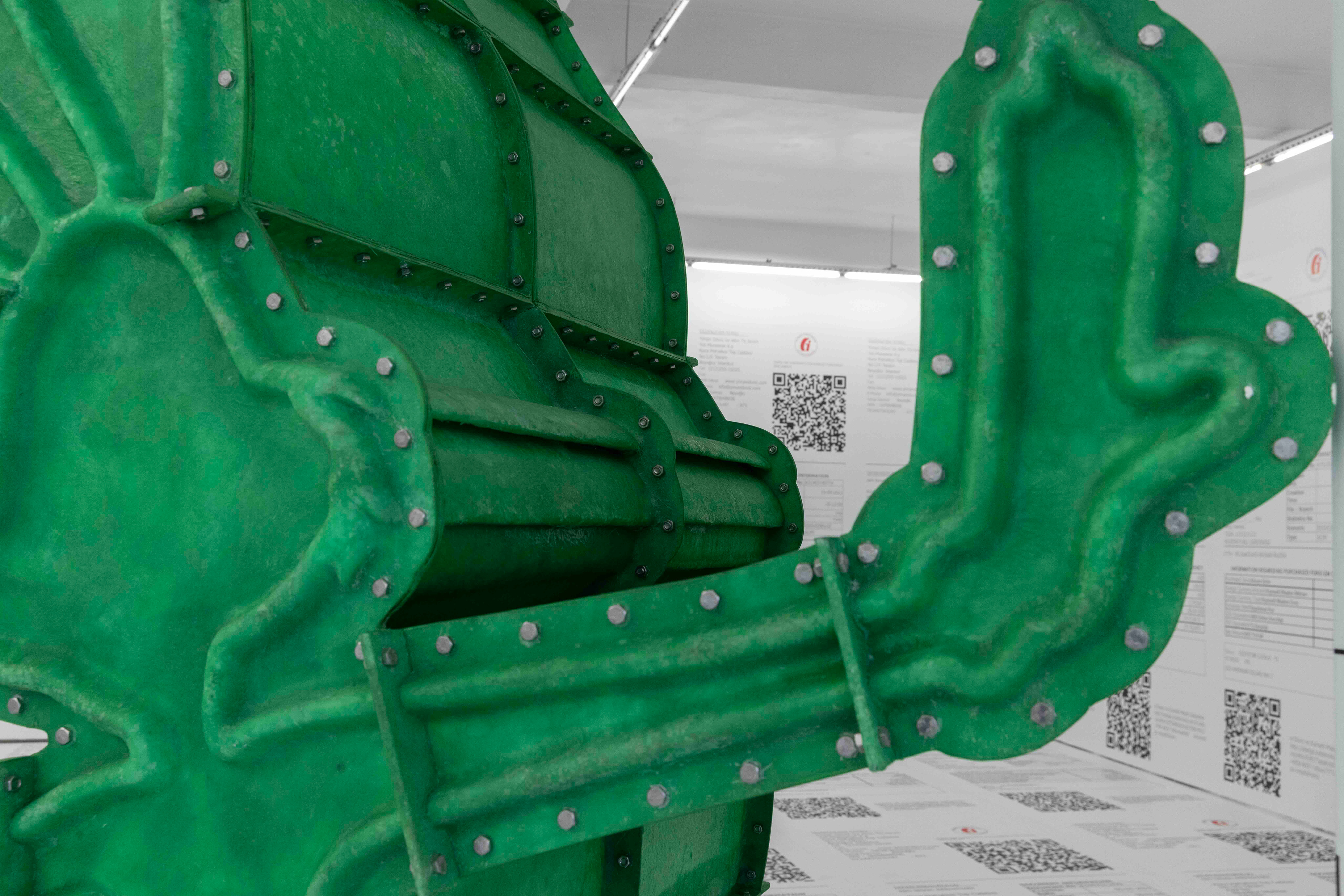
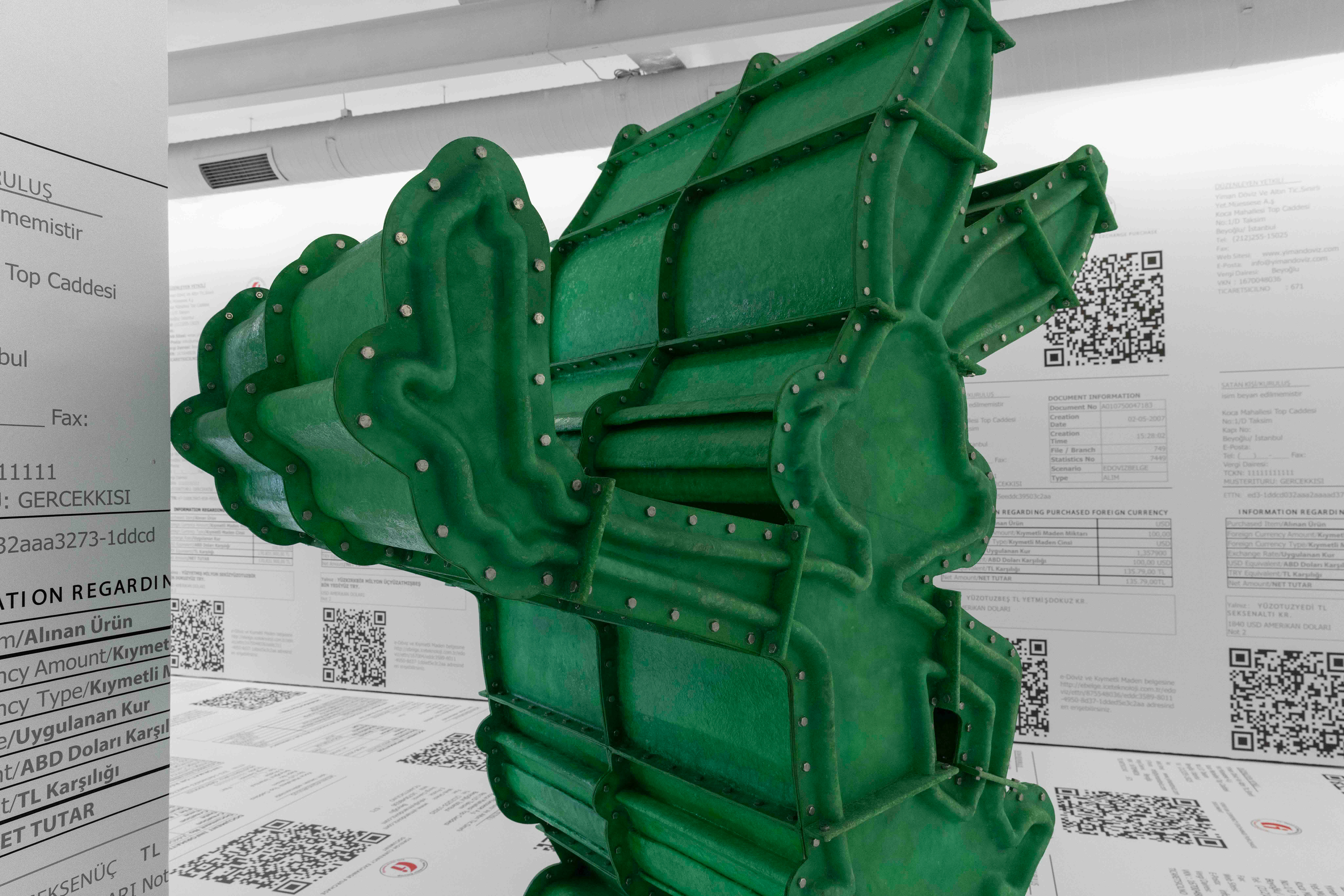
Fiberglass is a symptom. Designed for lightness and durability. It belongs to the economies of substitution: the amusement park, dioramas, props, carnival statues, military components, mannequin torso, the museum replica, façades, the prosthetic ruin. Fiberglass survives by standing in. It holds the place of what has been removed. A surface with no claim to ancestry. A body without arrival. Fiberglass belongs to a regime of circulation. Objects endure by remaining usable, visible, repeatable. Encounter collapses into function, distance into access. The material carries this collapse openly. It offers continuity without origin. It keeps things available without letting them be present. Every fiberglass surface is an index of process, of institutional repair, concealment, duplication, denial. The material fatigues. It yellows. It warps. Its decay is administrative. It does not archive history. It archives management. Unlike stone, bronze, or marble, it carries no illusion of permanence through tradition. Instead, it mimics permanence. This is the language of the back room. Surrogate, the model, the fake original.
Yet fiberglass is not merely the language of backrooms. The artist operates knowingly within the situation. The material circulates. The function of the material shifts. Substitution stays exposed. Absence is not filled in. Pressure remains visible. It becomes endurance. A surface capable of surviving handling, transport, misreading. Circulation leaves its mark. Contact accumulates. Fiberglass behaves as soft armor. Impact is absorbed. Vulnerability persists. Presence continues without authority, without origin, without end.
Then comes the green. The toxic, alert-coded, hazard-flashing green. This is not patina; this is panic dressed in the guise of age. This green screams before it utters a single word. A green that announces contamination even when the air is technically clean. It coats the surface like evidence: something leaked here, Something went terribly, terribly wrong, something was covered up. Synthetic patina is institutional overcare turned violent. A surface treated so aggressively that the treatment becomes the wound. It is age accelerated for display, decay rehearsed for legitimacy, loss compressed into a single color. Toxic green is the hue of crisis management. This is the green used in emergency signs. This is the green used in anti-counterfeit ink. This is the green used in UV monitors. This is the green used in biohazard assessment. It stains the object with the bureaucratic logic of harm: identify, isolate, warn, contain. And even then, the green glows through, insisting on the instability of the narrative.
Silhouette, too, is a symptom and a tool shaped by economy as much as by form. A silhouette is feasible: easy to reproduce, easy to circulate, easy to authorize. It requires little material, little explanation, little risk. This is its political efficiency. Institutions rely on silhouettes because they travel well. They reduce bodies into manageable units, stories into usable shapes, histories into graphics that can be stamped, scaled, trademarked. The silhouette is the lowest common denominator of representation. Its economy is one of minimization: minimize detail, minimize context, minimize accountability.
The artist deliberately adopts this same economy, but with a reversal of the original intentions set out by the institution. The silhouette becomes a counter-archive precisely because of its feasibility. Its cheapness allows repetition. Its flatness allows accumulation. Its legibility allows circulation beyond permission. What the institution uses to simplify, the artist uses to insist until it becomes impossible to ignore. This is where silhouette stops functioning as a logo and starts functioning as a record, not of identity, but of extraction. The artist’s silhouette refuses resolution. It doesn’t permit interiority as a choice. Scaled beyond comfort, its edge hardens into a boundary, the boundary into a blockage. What was meant to be economical becomes costly. What was meant to move smoothly begins to block space.
And then, scale is the pressure point where all these symptoms finally reveal their common cause. Scale is never neutral. Scale is how systems defend themselves: shrink the problem, enlarge the distraction, resize the narrative until it fits the filing cabinet. Institutions survive by miniaturizing harm. Compressing it into the dimensions of “personal dispute,” “private matter,” “isolated case,” “miscommunication.” Meanwhile, survivors enlarge the frame. They refuse to let the event stay small. They accumulate testimonies, data points, names, voices. They turn the whisper, which was meant to be contained, into an atmosphere no architecture can hold.
Scale decides what becomes visible, what becomes archived, and what becomes strategically forgotten. When scale breaches containment, the institution begins to crack. The language falters. The corridors thicken with avoidance. The system reveals its true shape. Not the silhouette it projects, but the shape of its exhaustion, its complicity, its dependence upon the diminishment of that which was to be expanded. By the time the evidence covers the room, by the time every surface becomes a ledger of inflation, devaluation, survival, scale is no longer a measurement. It becomes weather. A climate. A field condition that reorganizes how bodies move through space and how power attempts, and fails, to keep the narrative small.
Fiberglass, toxic green, silhouette, scale. These are not materials.
They are symptoms of an environment that cannot contain its own contradictions.
They are remnants of systems that endure through erasure and stabilize by minimizing the very events that expose them.
They are symptoms of an environment that cannot contain its own contradictions.
They are remnants of systems that endure through erasure and stabilize by minimizing the very events that expose them.
In this exhibition, minimization is no longer an option.
İrem Günaydın
2025, İstanbul
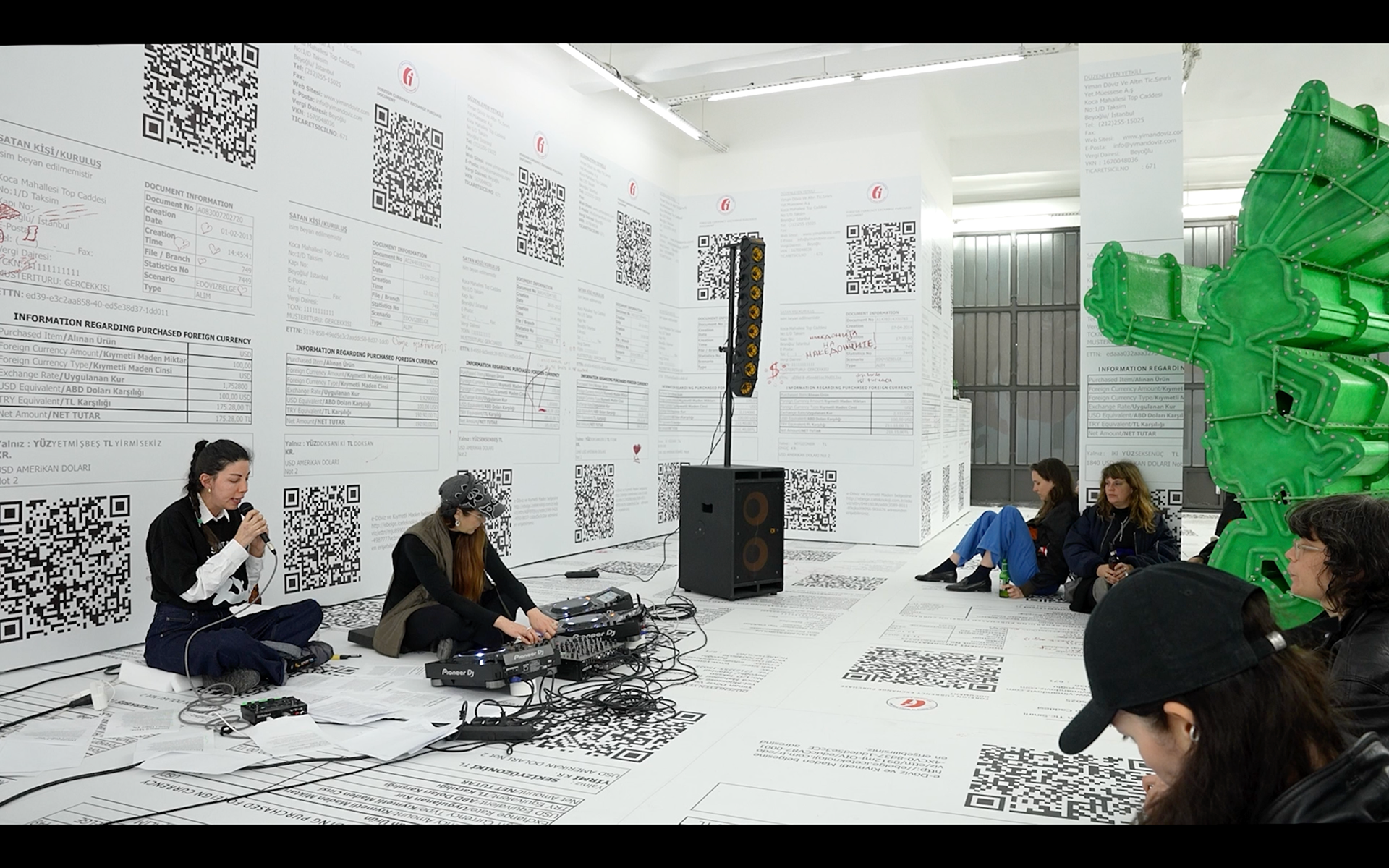
Live performance of About the Artist, conceived by İrem Günaydın, in collaboration with Lena Willikens, staged within the exhibition About the Artist at The Pill, Istanbul, 2026.
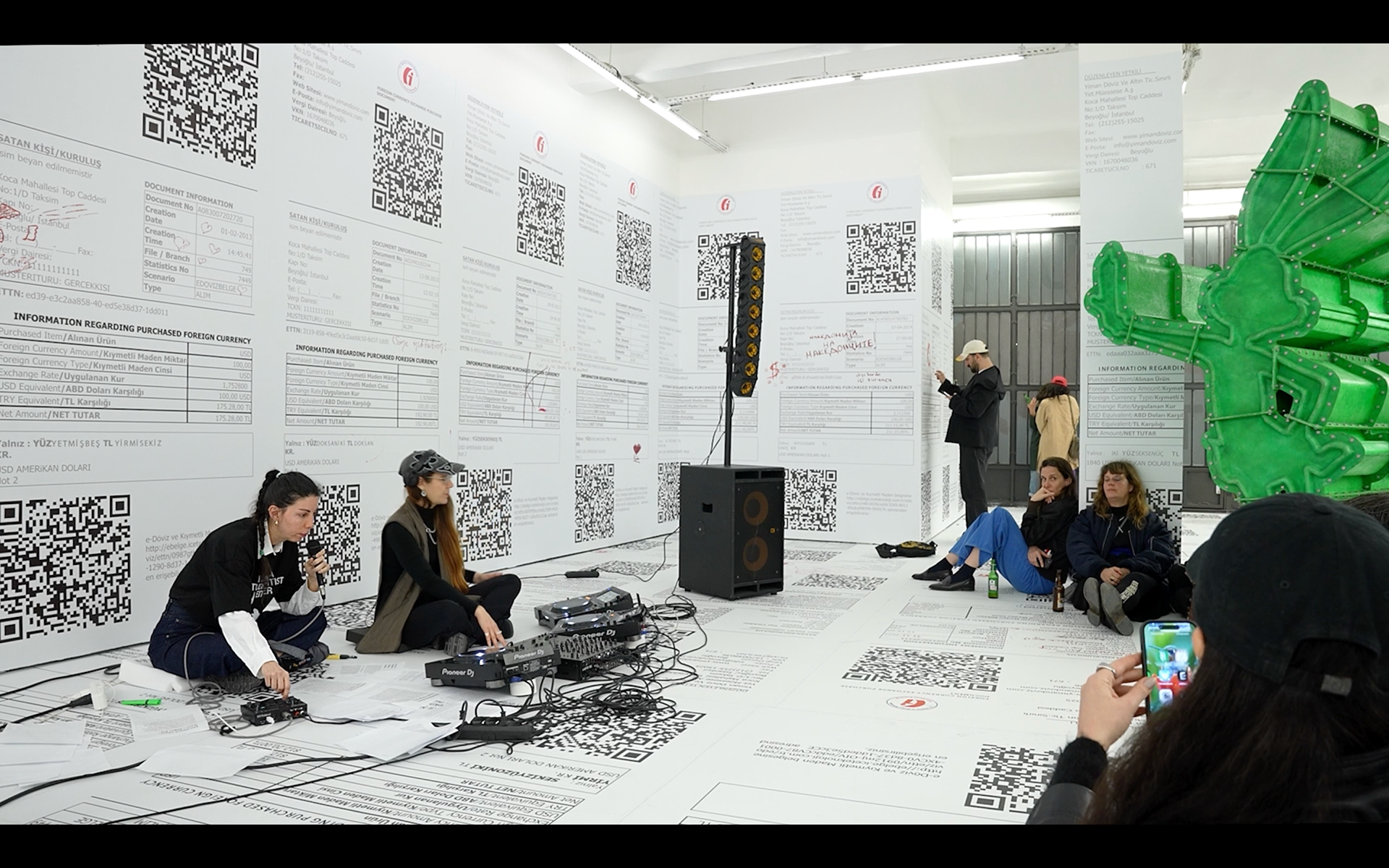
Live performance of About the Artist, conceived by İrem Günaydın, in collaboration with Lena Willikens, staged within the exhibition About the Artist at The Pill, Istanbul, 2026.
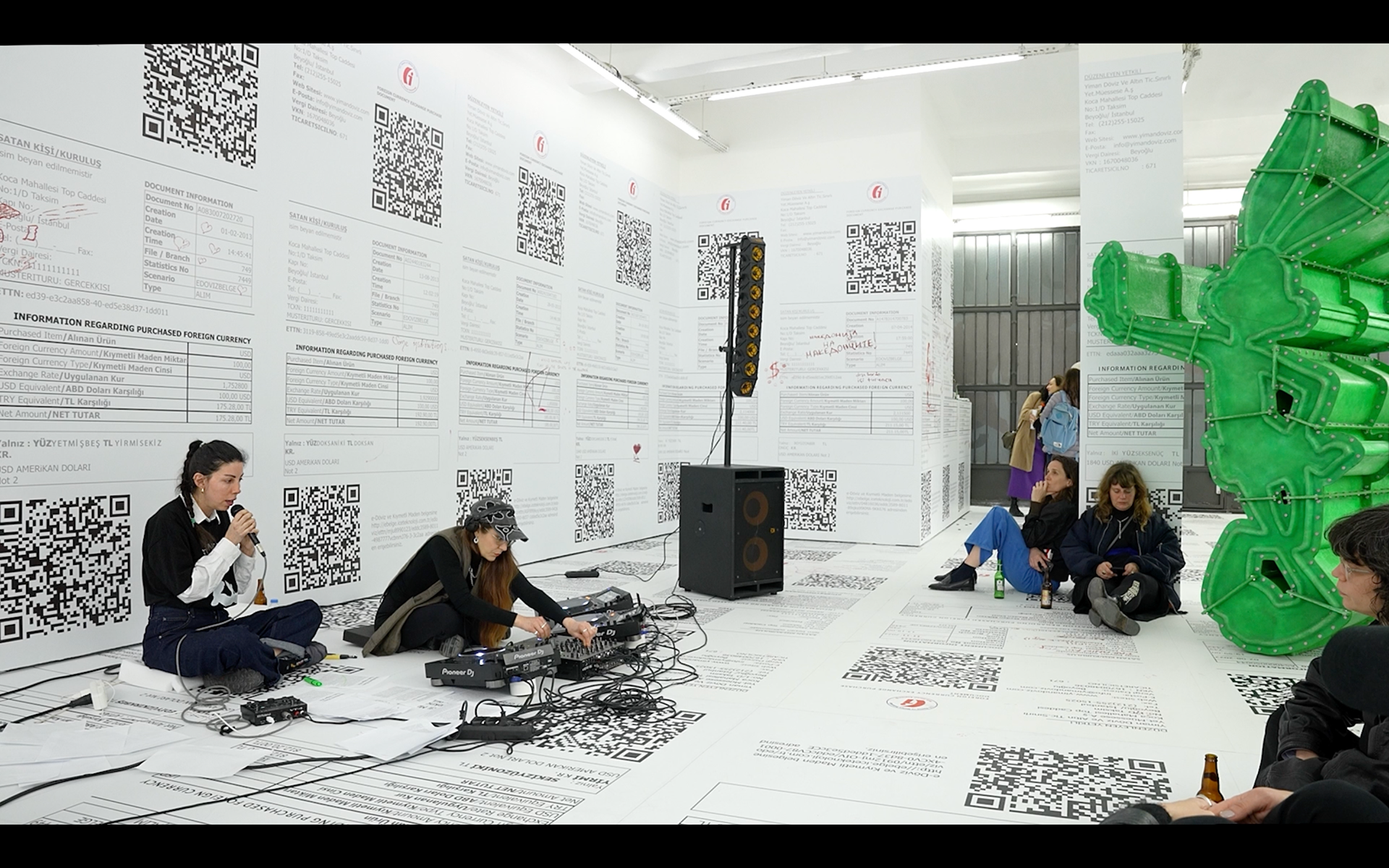
Live performance of About the Artist, conceived by İrem Günaydın, in collaboration with Lena Willikens, staged within the exhibition About the Artist at The Pill, Istanbul, 2026.
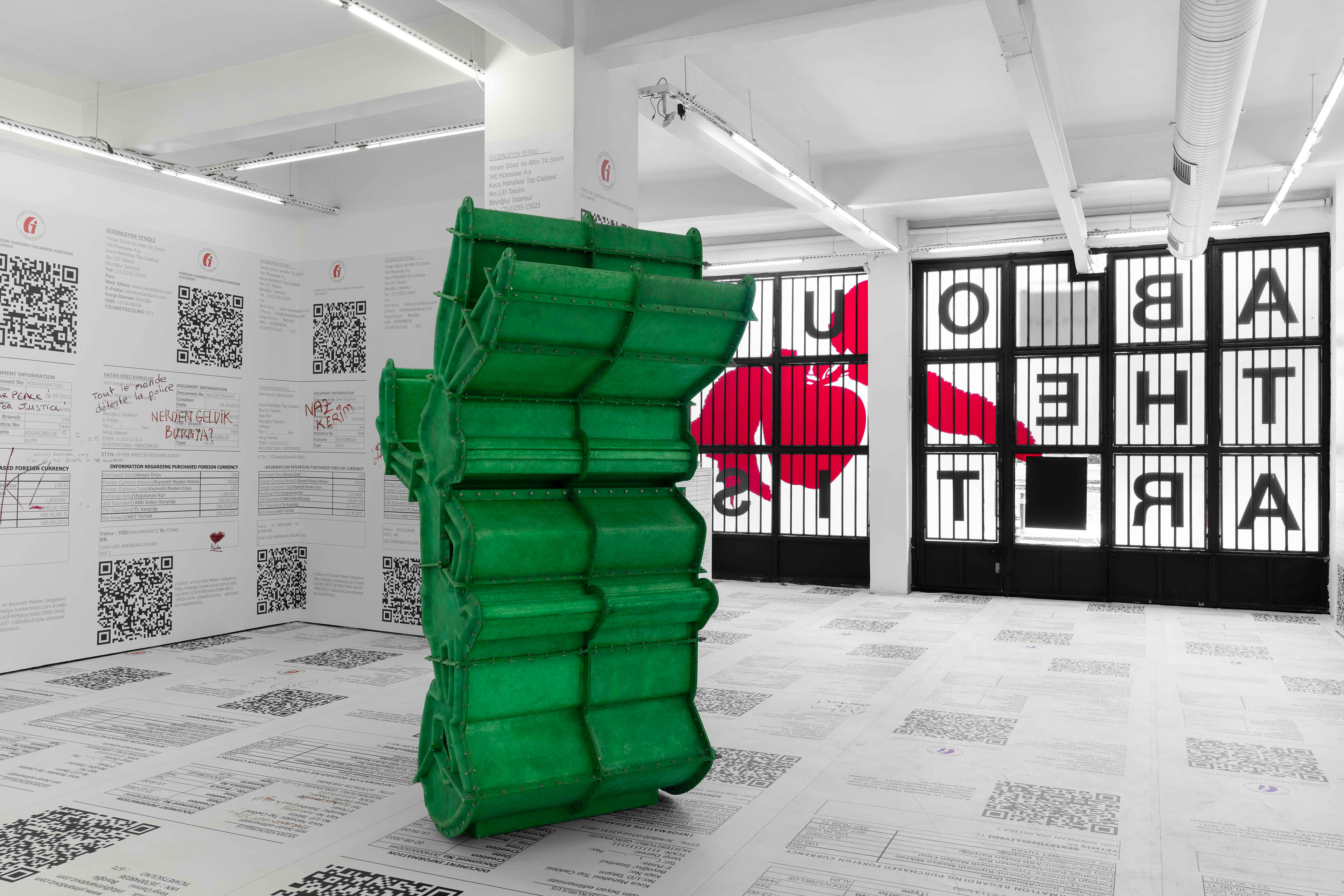
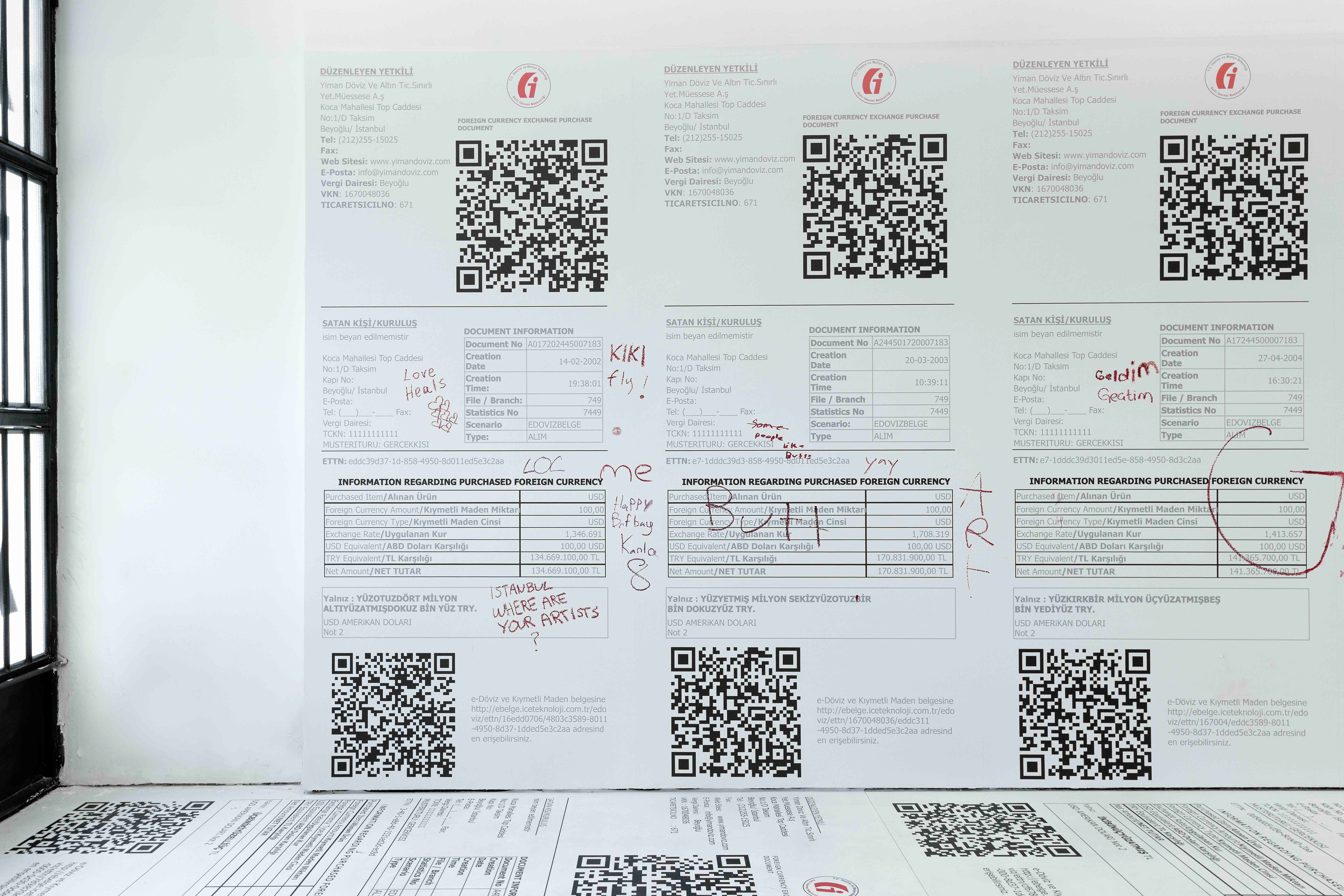
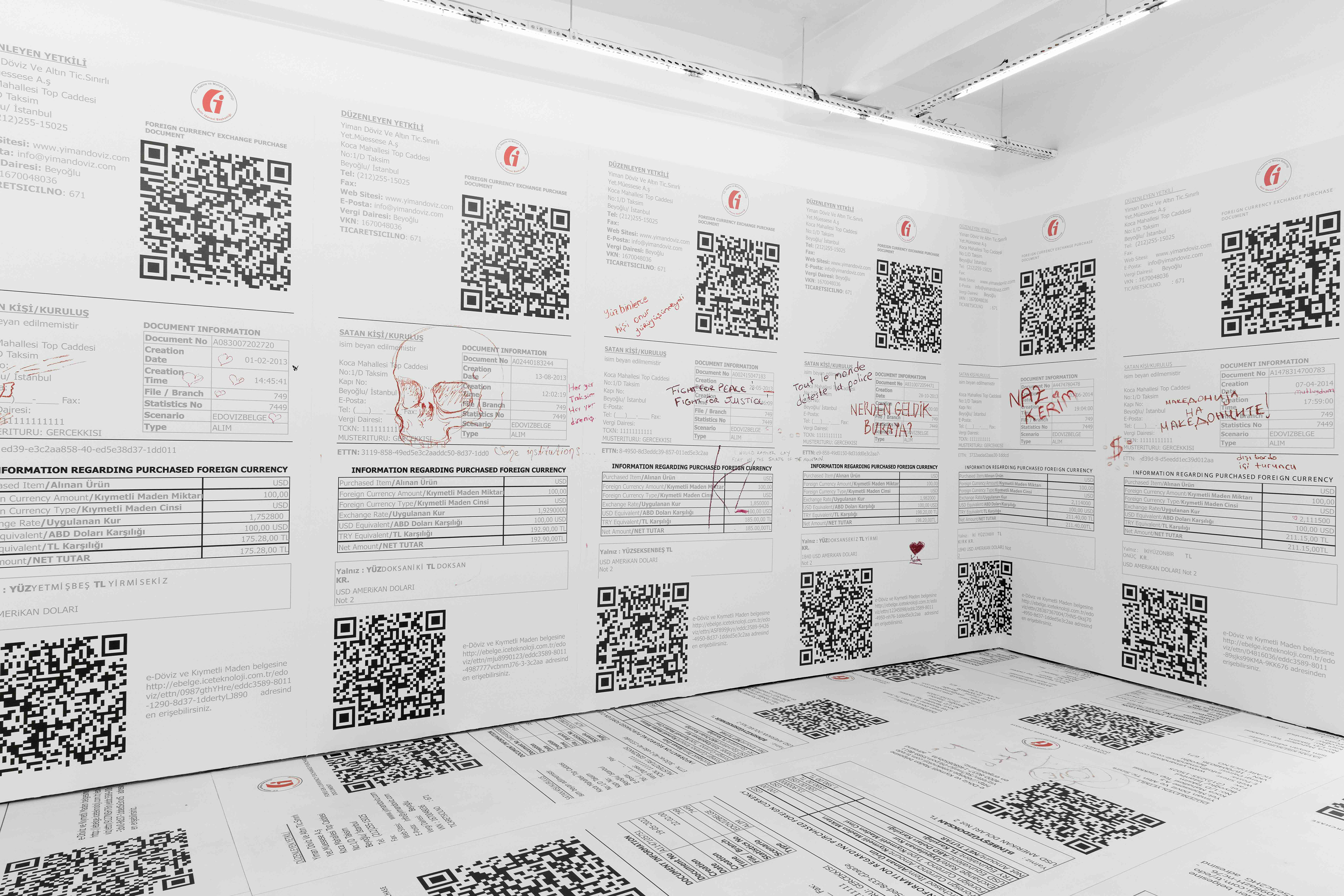
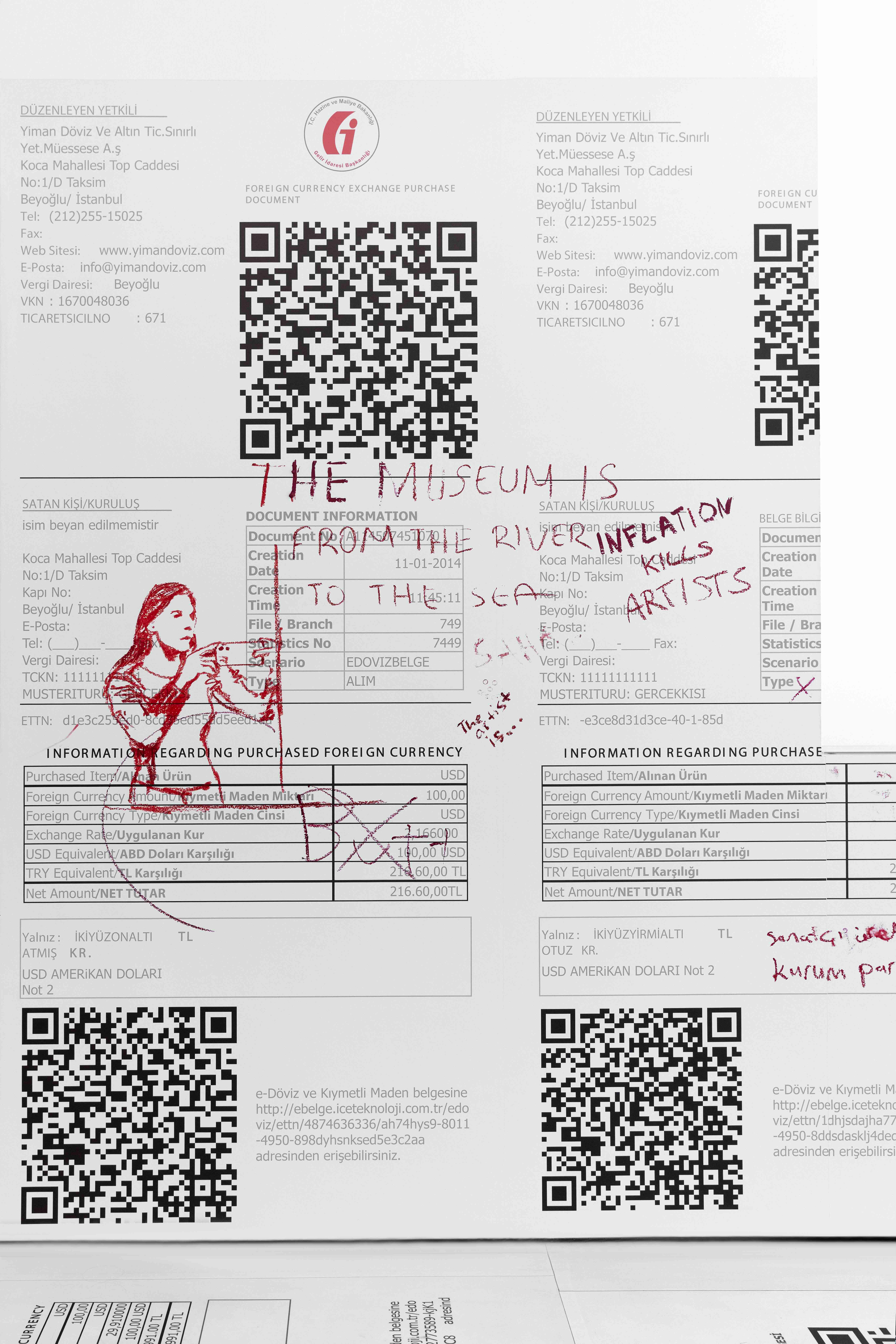
Visitors’ interventions written in lipstick on the Weather Report
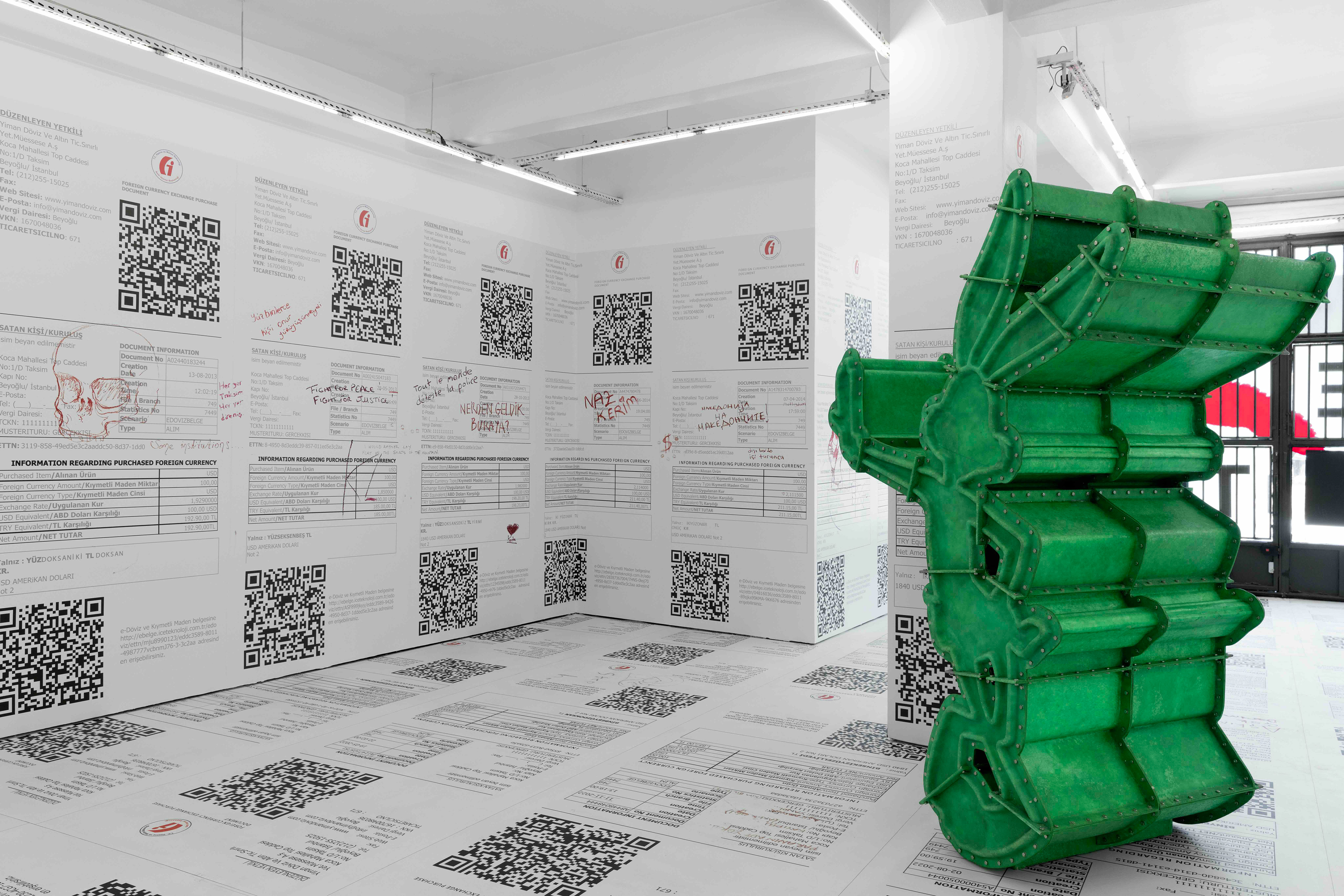
Visitors’ interventions written in lipstick on the Weather Report
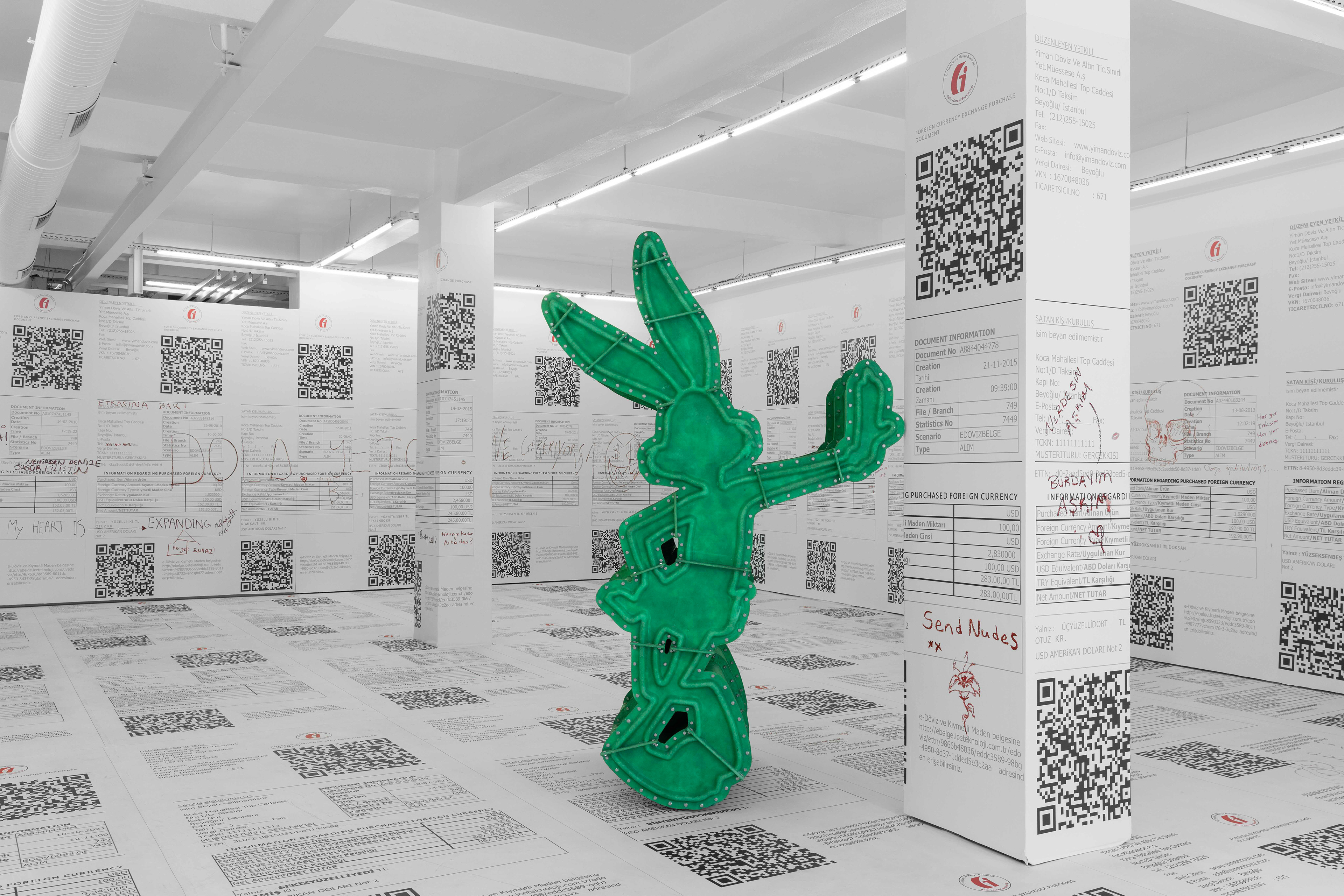
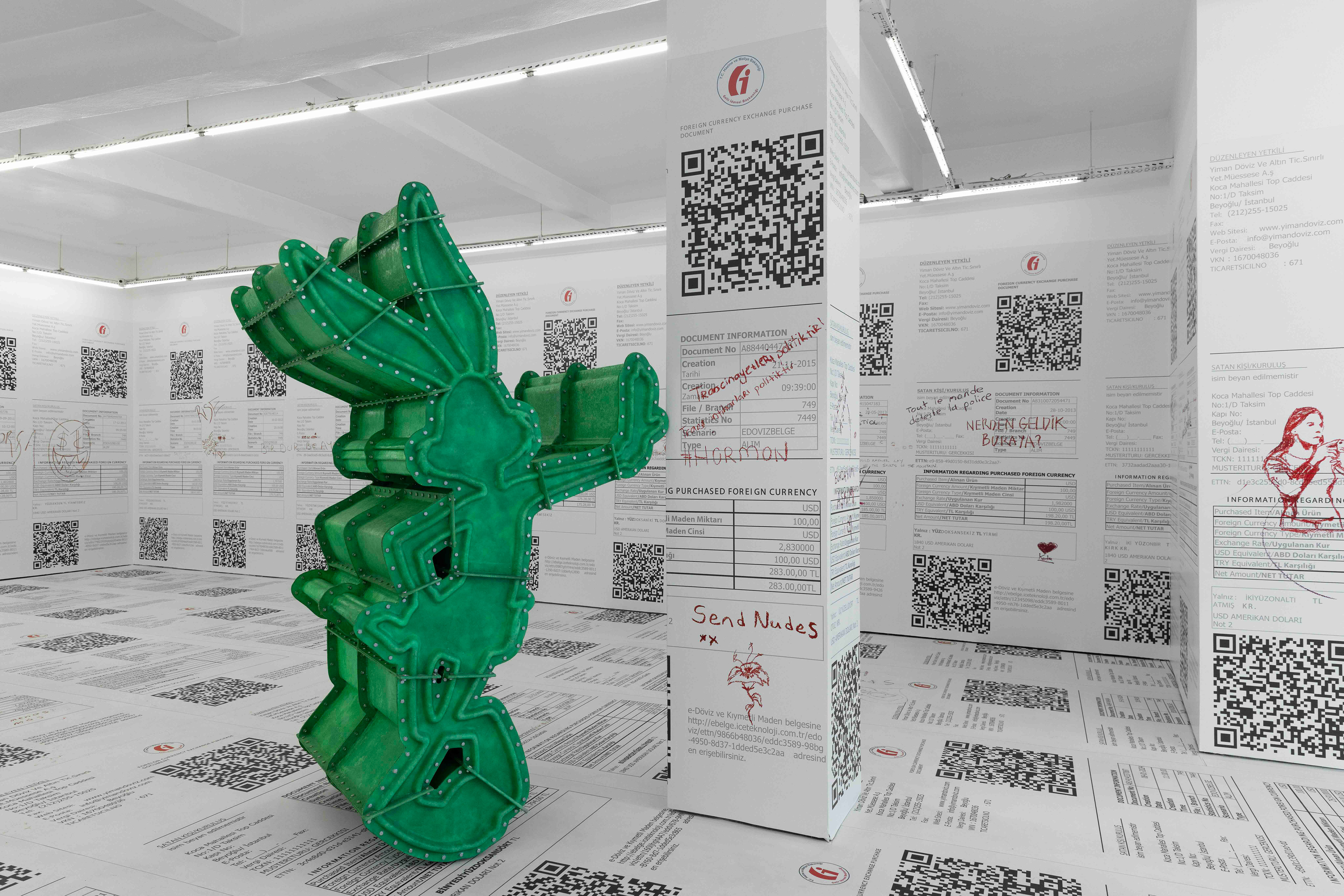
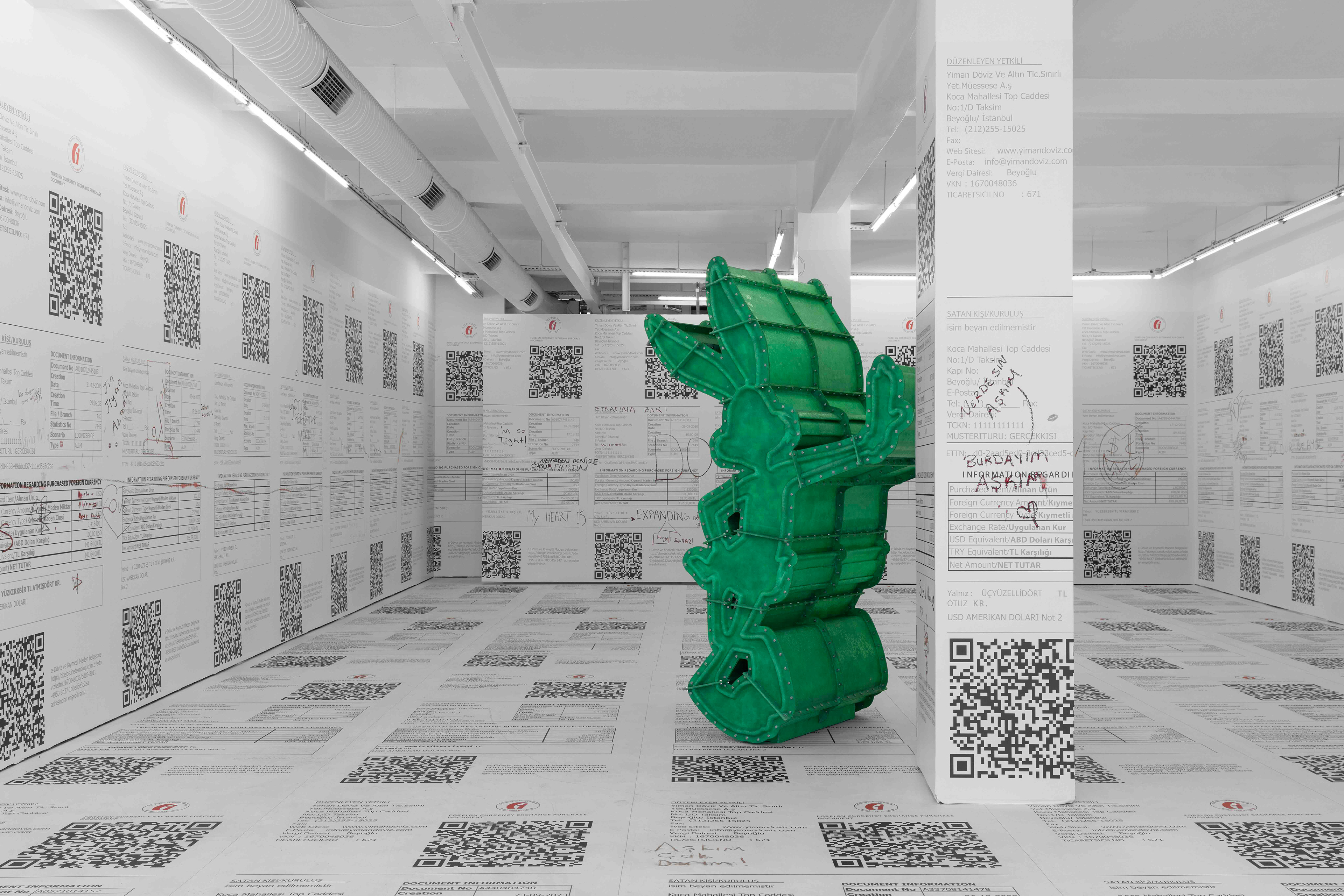
Fourth Bunny (Portrait I), Fiberglass, mold-based sculpture, 250x150x111cm, 2025
Fourth Bunny (Portrait I), Fiberglass, mold-based sculpture, 250x150x111cm, 2025
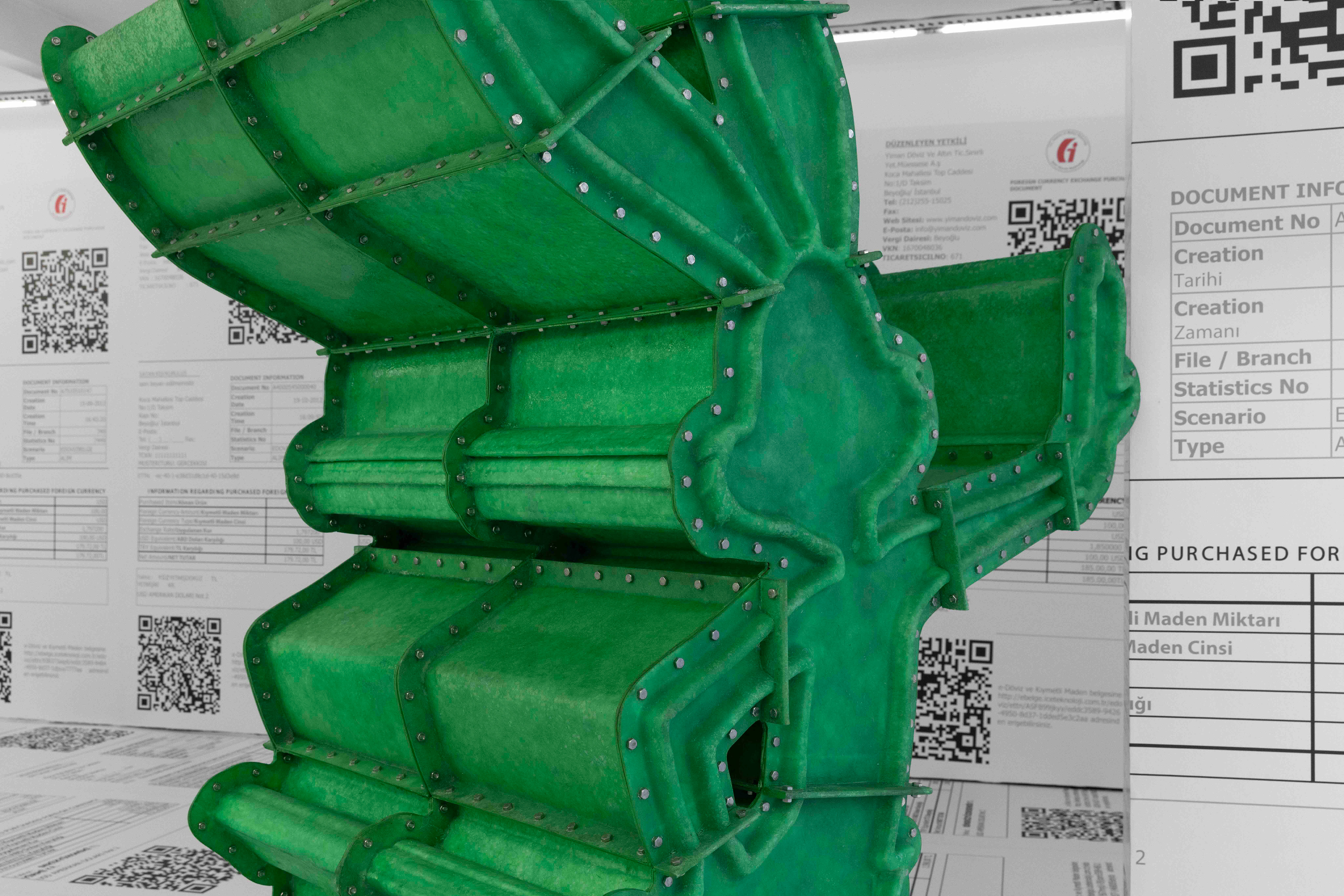
Fourth Bunny (Portrait I), Fiberglass, mold-based sculpture, 250x150x111cm, 2025

Fourth Bunny (Portrait I), Fiberglass, mold-based sculpture, 250x150x111cm, 2025
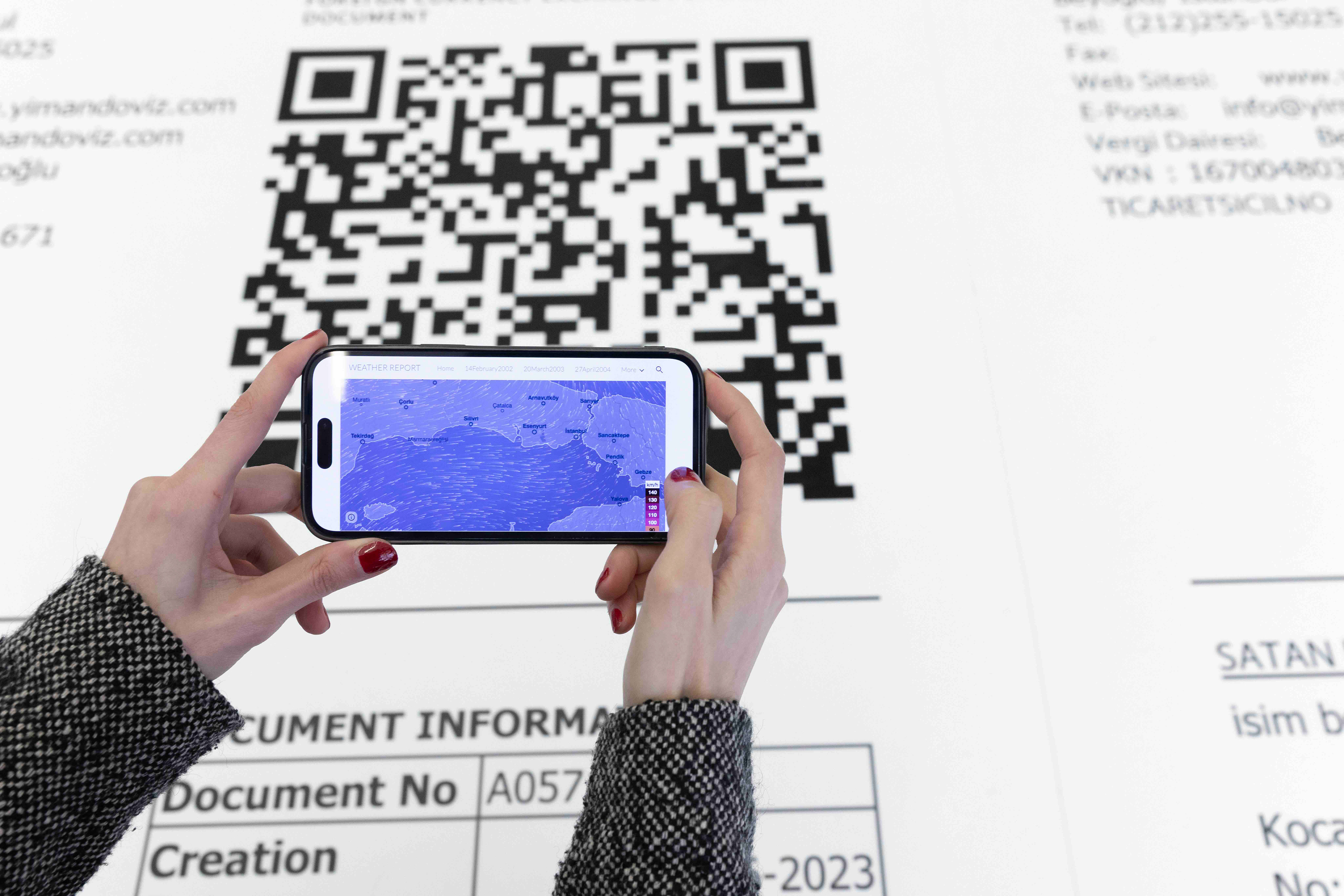
Weather Report, 2026 Installation with enlarged financial receipts and QR-linked historical weather data
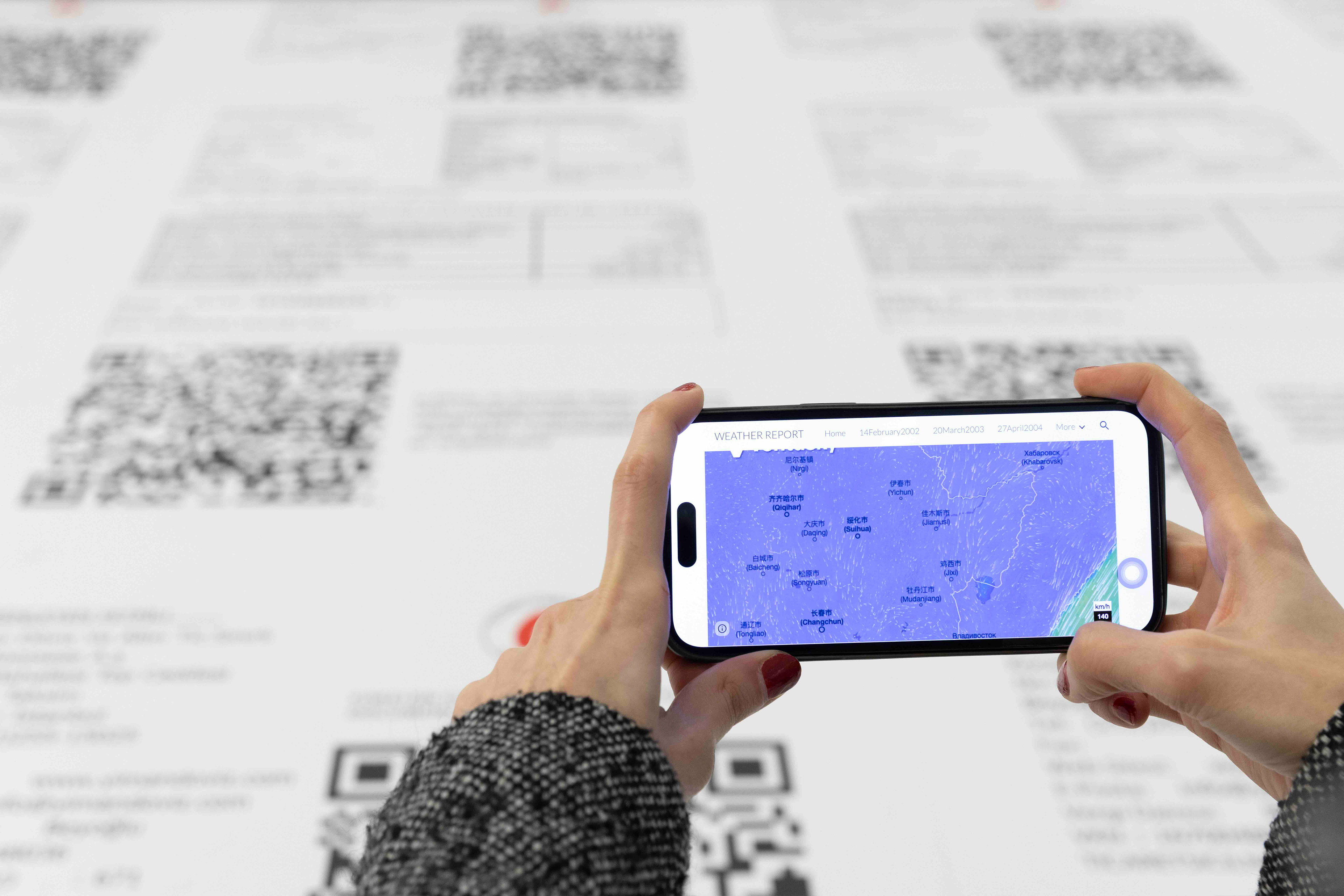
Weather Report, 2026 Installation with enlarged financial receipts and QR-linked historical weather data

Weather Report, 2026 Installation with enlarged financial receipts and QR-linked historical weather data
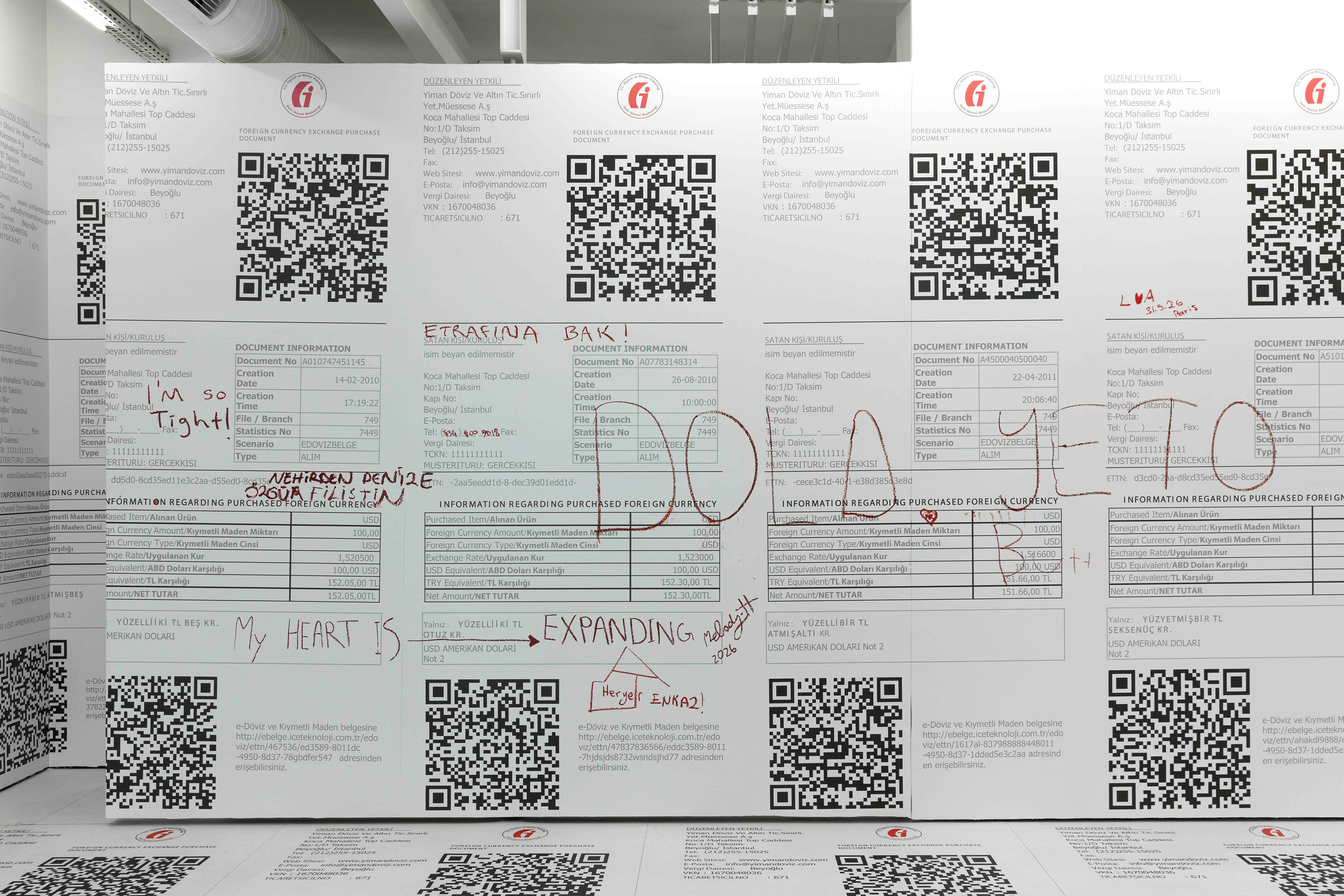
Weather Report, 2026
Installation with enlarged financial receipts and QR-linked historical weather data
Visitors’ interventions written in lipstick on the Weather Report

Visitors’ interventions written in lipstick on the Weather Report
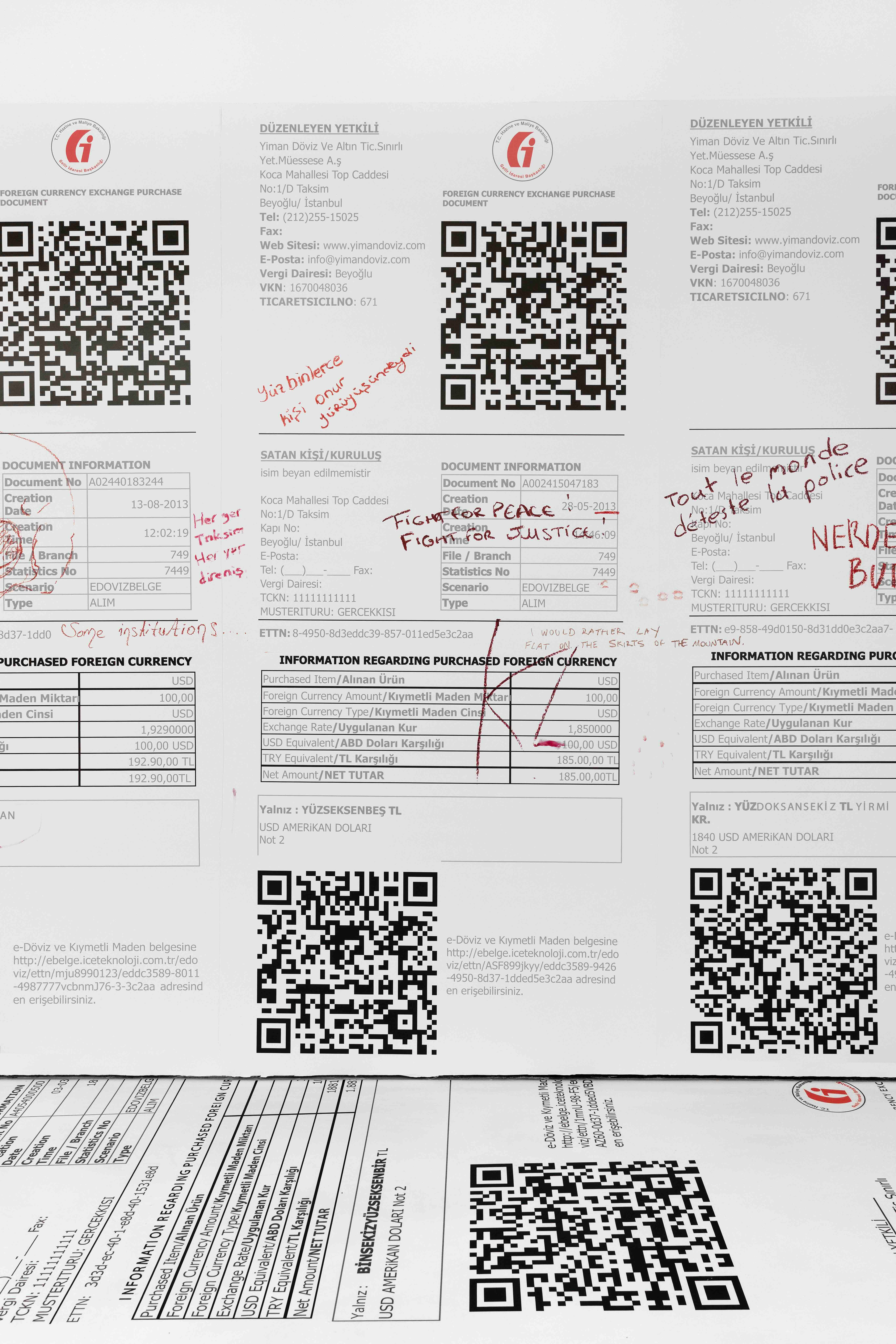
Visitors’ interventions written in lipstick on the Weather Report
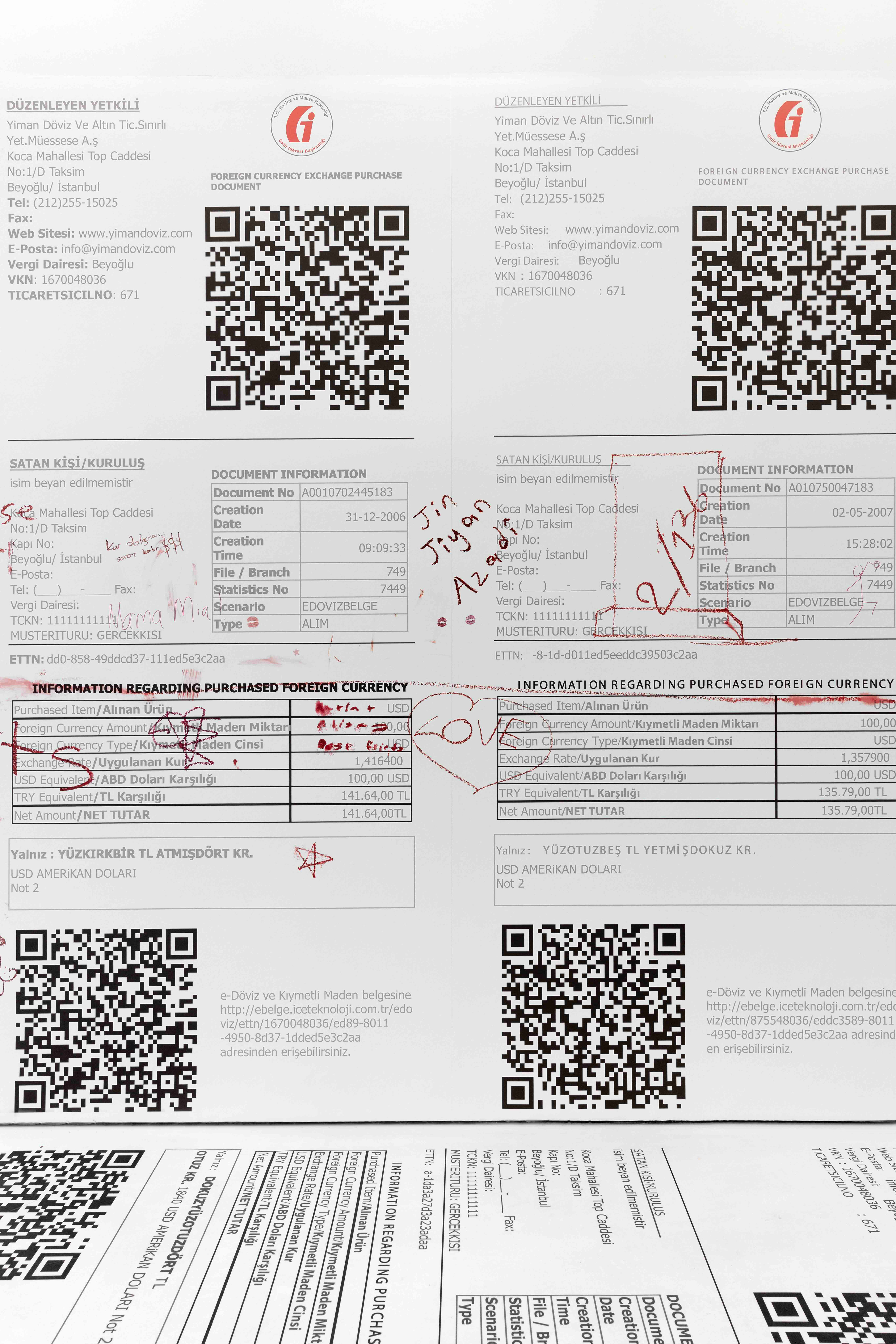
Visitors’ interventions written in lipstick on the Weather Report
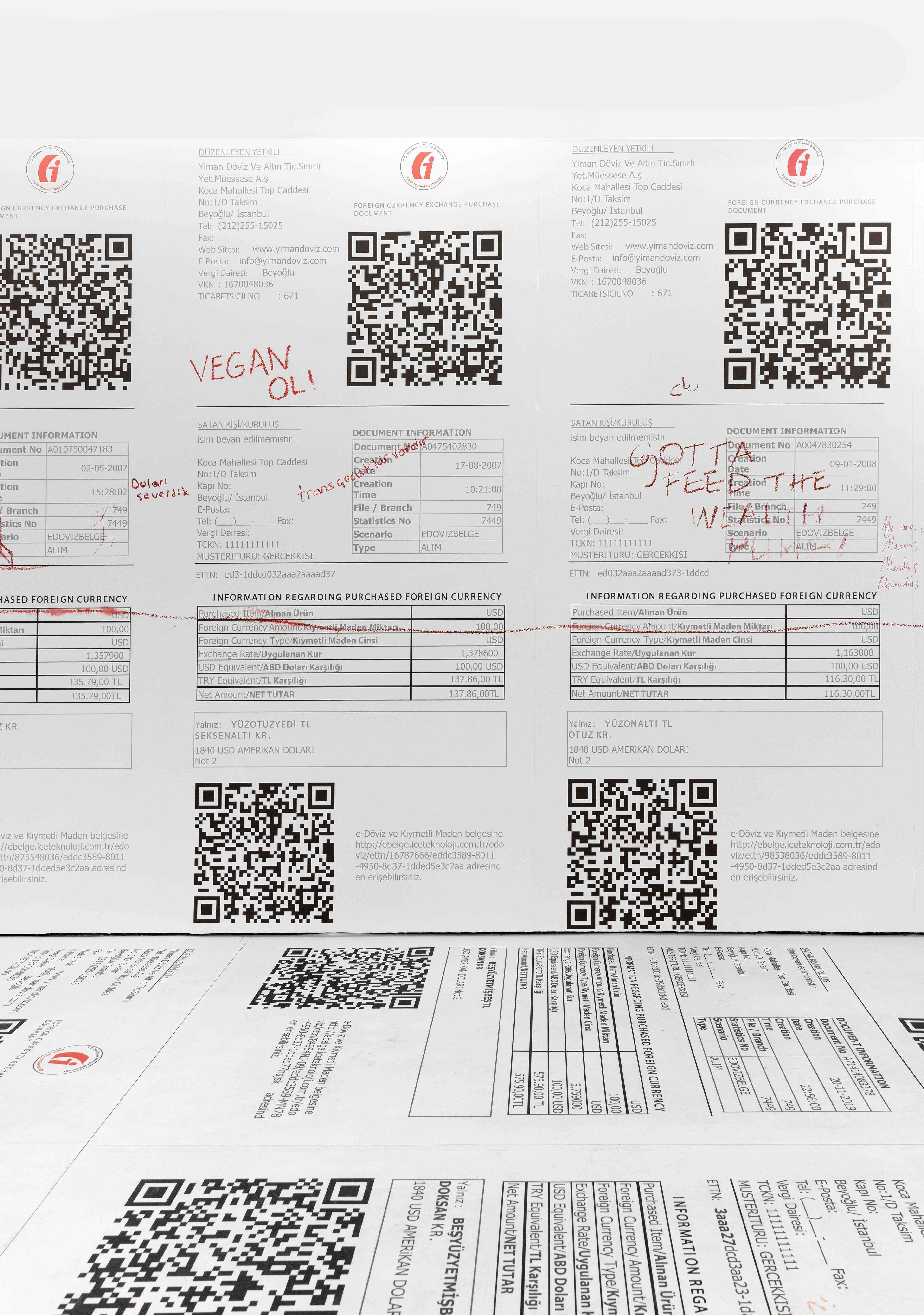
Visitors’ interventions written in lipstick on the Weather Report
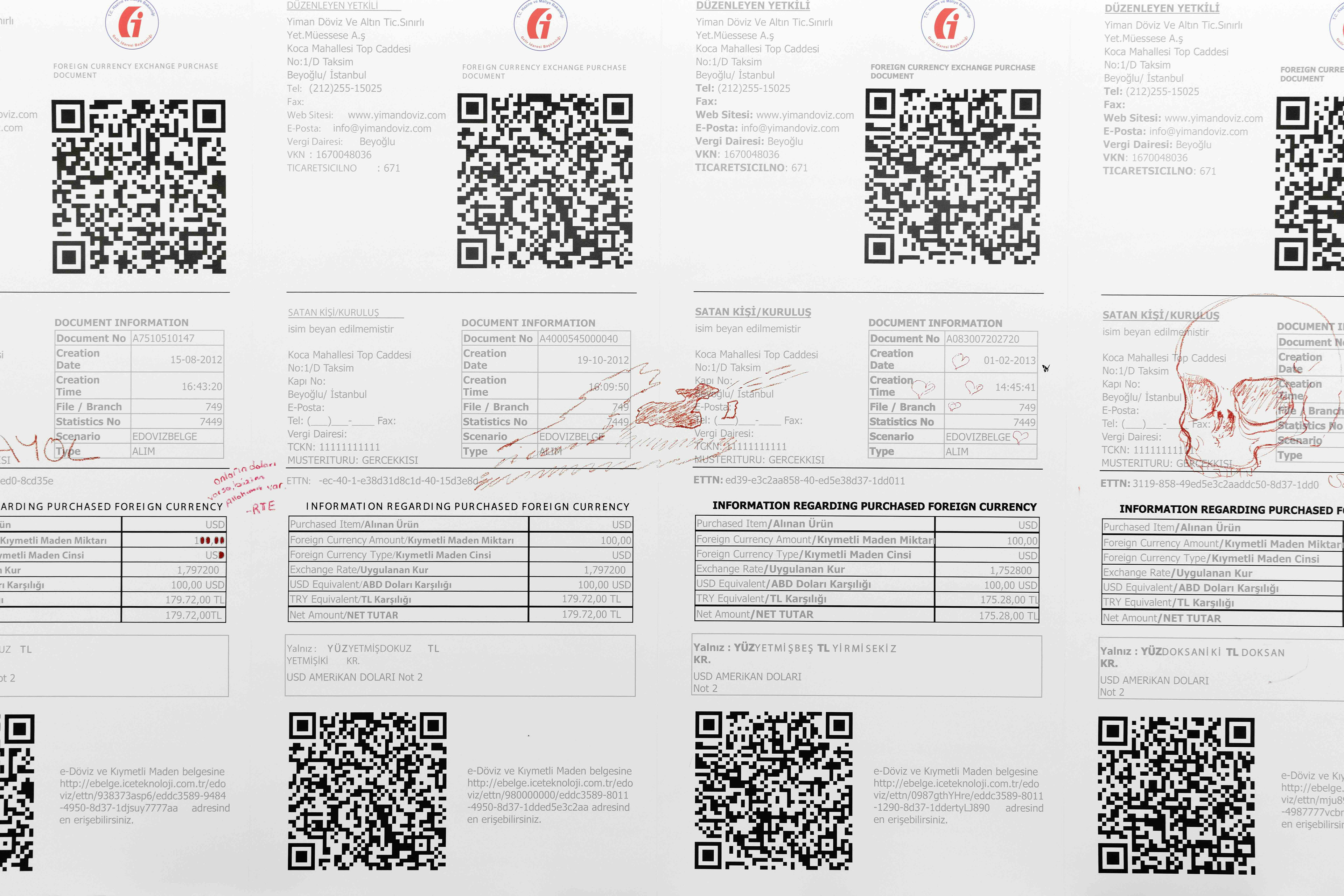
Visitors’ interventions written in lipstick on the Weather Report
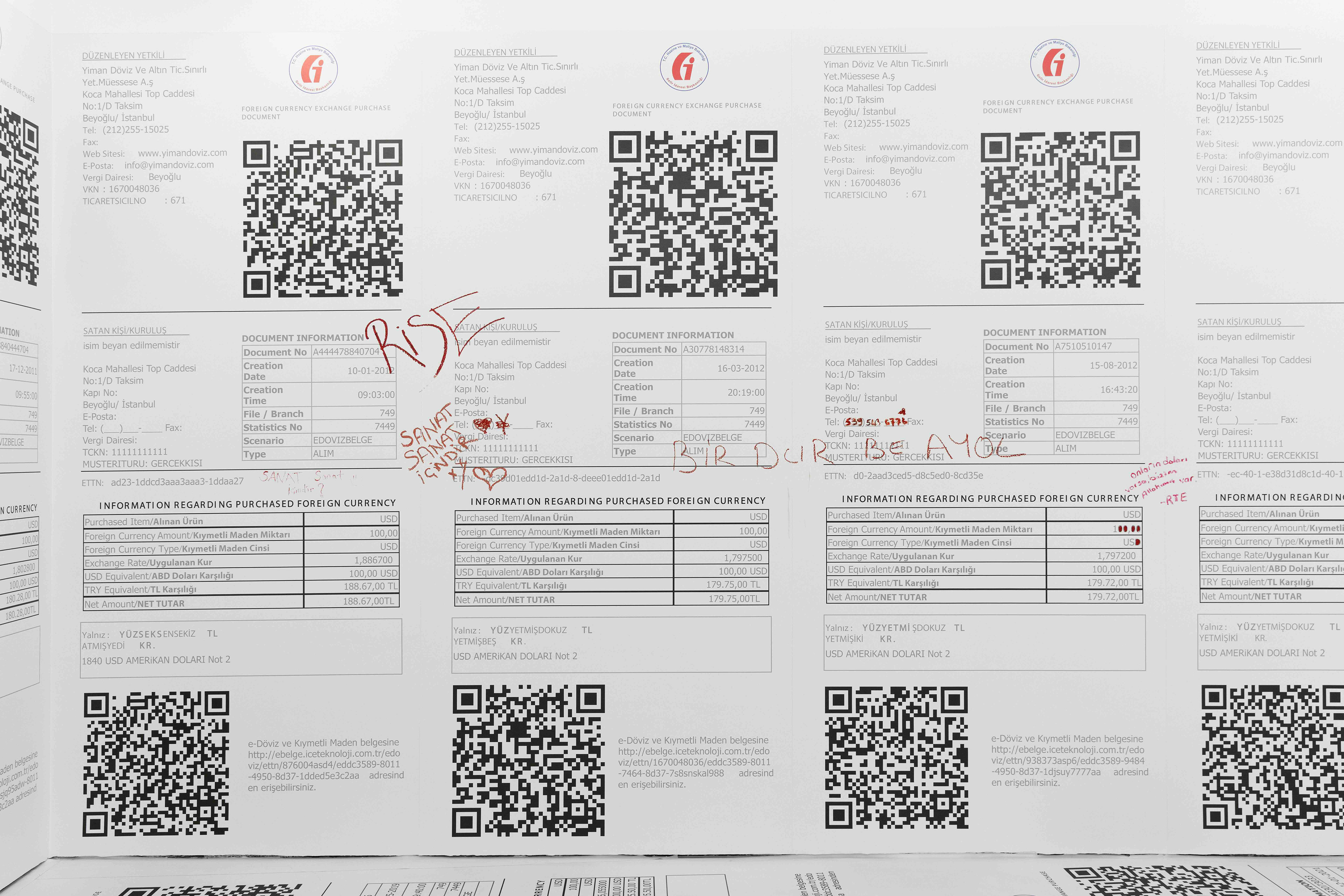
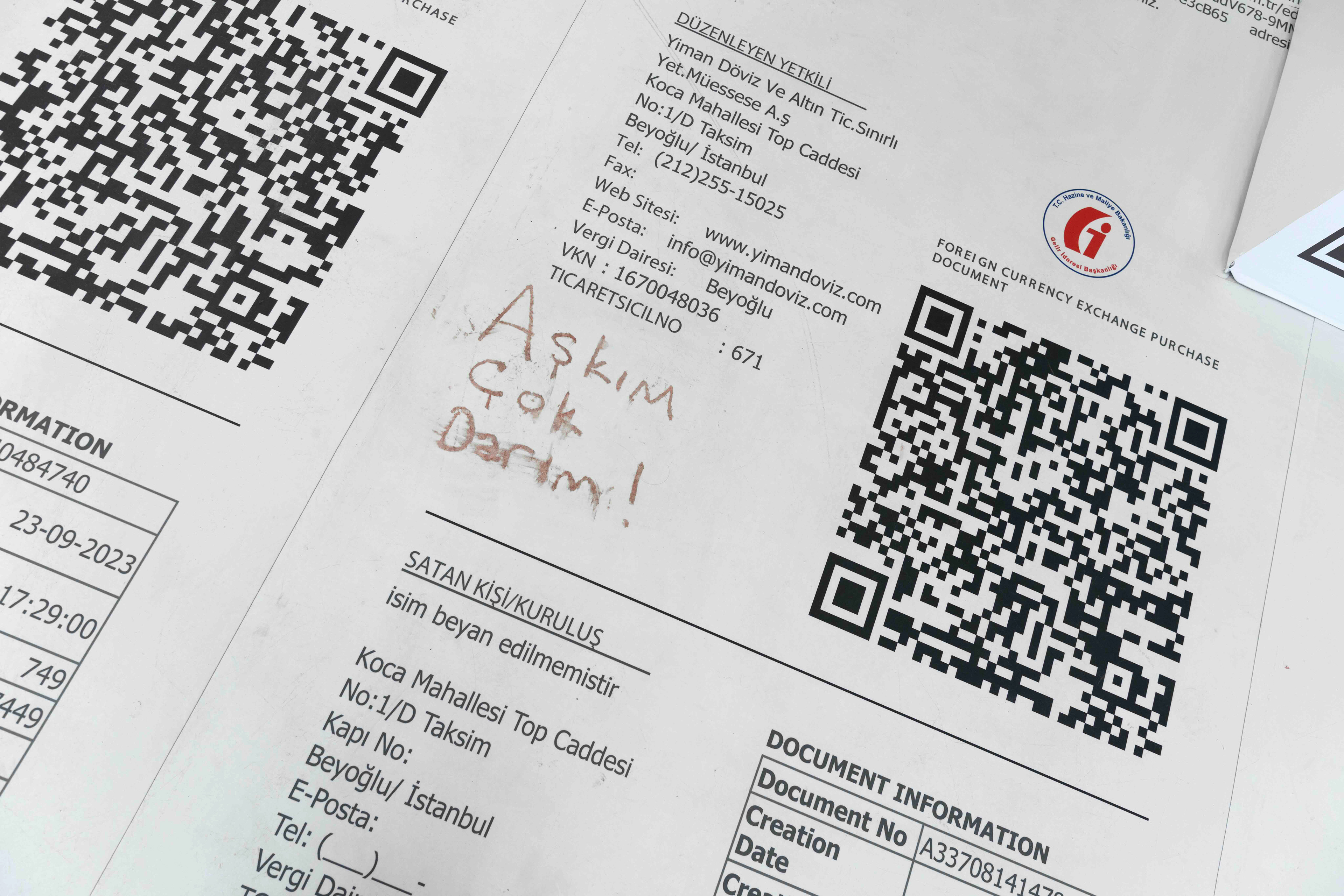
Visitors’ interventions written in lipstick on the Weather Report
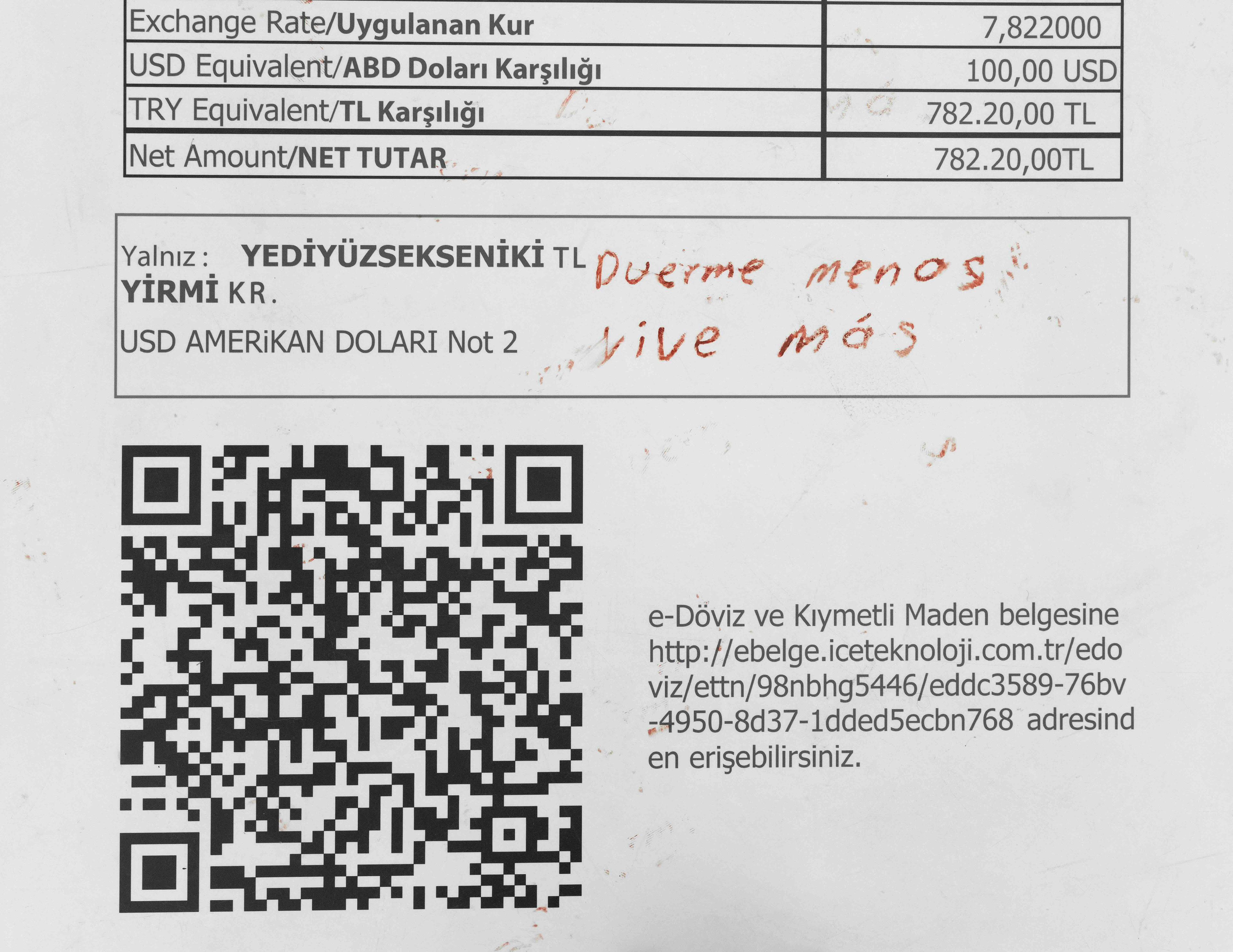
About the Artist, The PILL, 2026
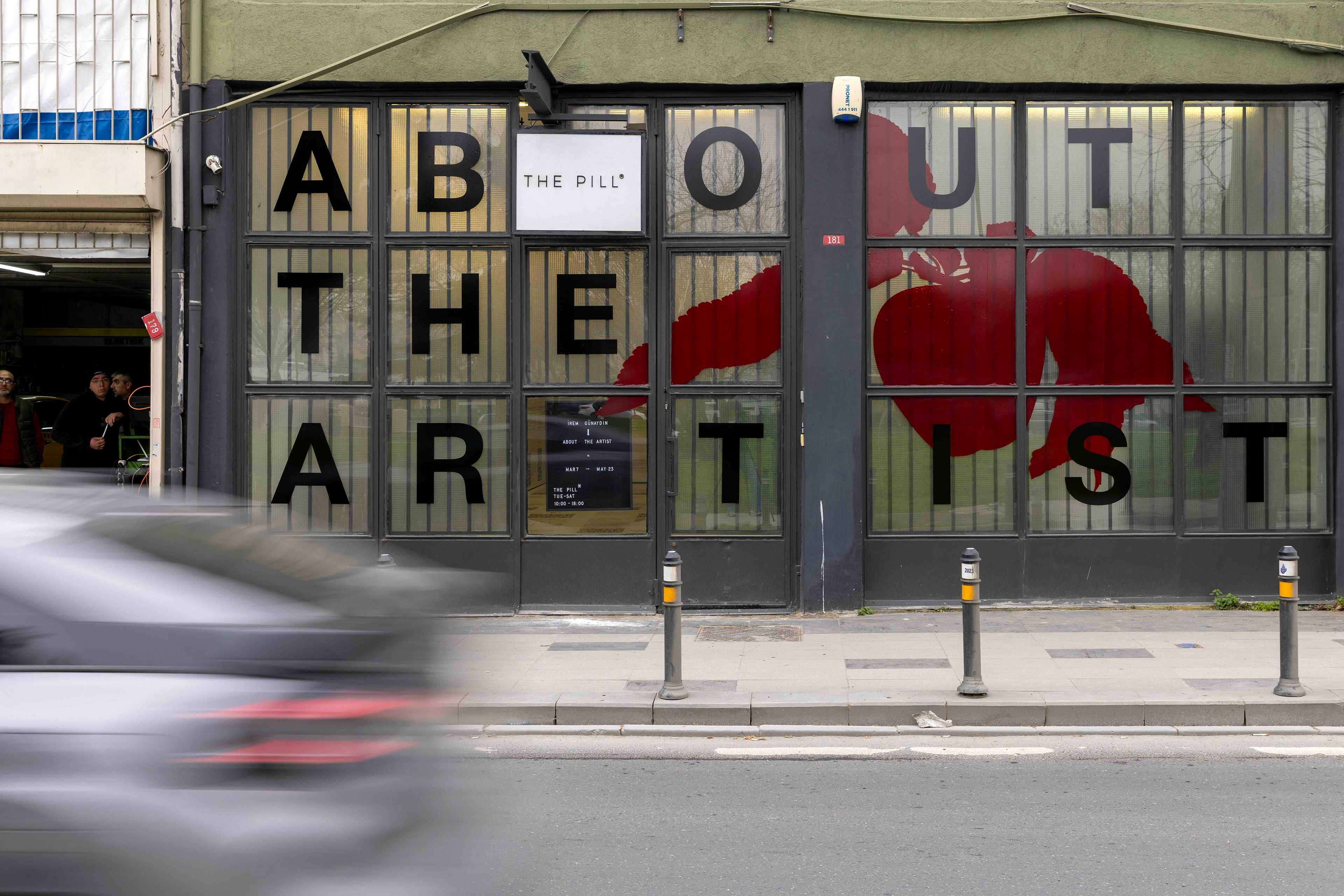
About the Artist, The PILL, 2026
Vinyl on glass, variable dimensions
ABOUT THE ARTIST turns the gallery space into an immersive and interactive environment where a single monumental sculpture stands alone against a backdrop of currency exchange records and real-time data flows. Operating at the intersection of financial transactions, currency value, weather reports, and wind patterns, the exhibition puts on display the recent history of dispossession in Turkey through the evolution of currency exchange rates of the last 24 years, re-imagined as an evolving climate. It also marks a third iteration in a series of conceptual propositions by Irem Günaydın, bringing into play transformed elements from her previous two solo exhibitions at the gallery.
Irem Günaydın’s thought process builds upon a concise conceptual and formal vocabulary to explore what remains at the edges of narrative, form, and institutional memory. In this exhibition, this unfolds through elements such as a fiberglass mold in a specific green color, the use of scale and repetition as political tools, and the figure of Bugs Bunny. With this vocabulary, Irem Günaydın shape-shifts between script, form, frame, mold, and scale. This time, with its tautological title, the exhibition reveals the artist as an unstable yet continuous fiction conjured into reality through instances of institutional critique in changing forms, ranging from a conceptual score in written form to a trickster multiplication of the self through substitution, deployed as agile escape and proliferation strategies.
The frame, setting the boundary of representation, simultaneously stabilizing and setting in motion both the work of art and the labor of living, constitutes the object of inquiry in ABOUT THE ARTIST. This time, alongside the institutional framing of art, it is the larger institutional frames governing our lives that are at stake. As Bugs Bunny shifts from a silhouette into a fiberglass mold in “toxic green”, Irem Günaydın insists on its grotesqueness as a figure in blown-up scale, opening a discussion around the artist-as-activist, reduced to an inconvenience that must be contained by operations of minimizing. What Irem Günaydın chooses to upscale in the site-specific installation Weather Report is precisely that which is minimized in the hopes that it would disappear through the cracks of institutional discourse. And this organized amnesia is precisely what 75 foreign exchange tickets chosen from the last 24 years and blown up into an architectural scale is here to defy. The immersive environment urges us to remember and to confront, through this precision, the making of our current conditions of existence through the evidence - a counter-archive - displayed in a dizzying scale: the diminishing value of our smallest common denominator. And this covers everything from currency to social contract.
With ABOUT THE ARTIST, we move from the wild and joyous imagination connecting Cézanne’s truth in painting, the red and blue pills of The Matrix and Bugs Bunny at work in Salad Cake (2020), and through Scripted Expanded Molded I’s (2023) art-historical discussion of bastards and bastardization as a strategy of rebellious appropriation of what is held off-the-frame, to arrive here: the tone turns dark, the atmosphere thickens. The apple seems rotten, yes, there is something rotten in the state we’re in. And yet, The Fourth Bunny sits coherently next to The Fourth Medusa and The Fourth Table also known as the Bastard, turning the number four from an ordinal number to an ontological position, a suffix, a condition of being-after-too-many-times. As such, The Fourth Bunny is a monument to continuity through shape-shifting; a stand-in for organized memory, and now, it has the capacity to replicate itself infinitely through fibers of glass, the other smallest common denominator shaping our world.
As Irem Günaydın writes: In this exhibition, minimization is no longer an option.
Reading of 'Flaschenpost: I Owe You the Truth in Painting and I Will Tell It To You' 2026 Mother, curated by Hermes Payrahuber, NY, USA
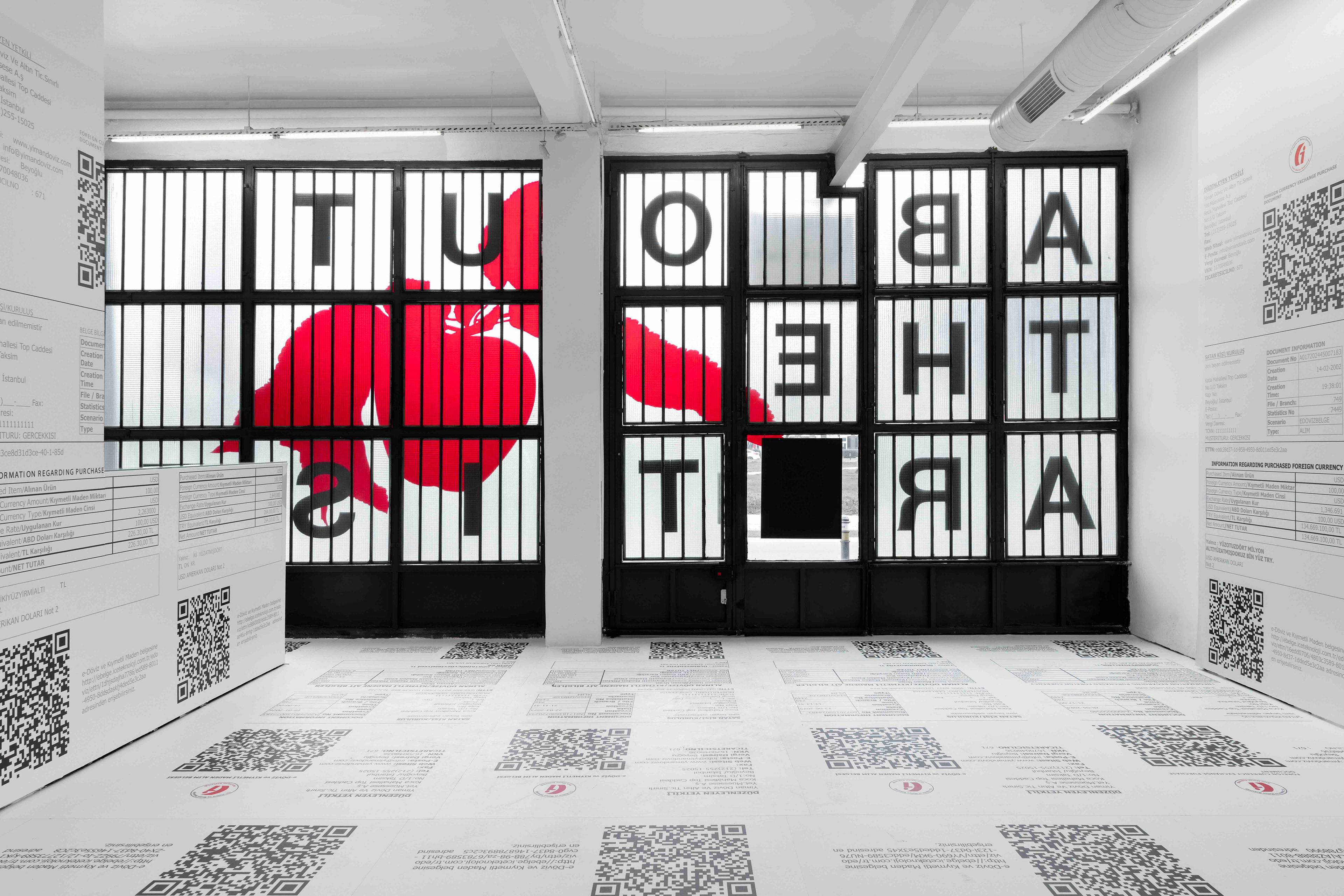
Fourth Apple, The PILL, 2026
Vinyl on glass, variable dimensions